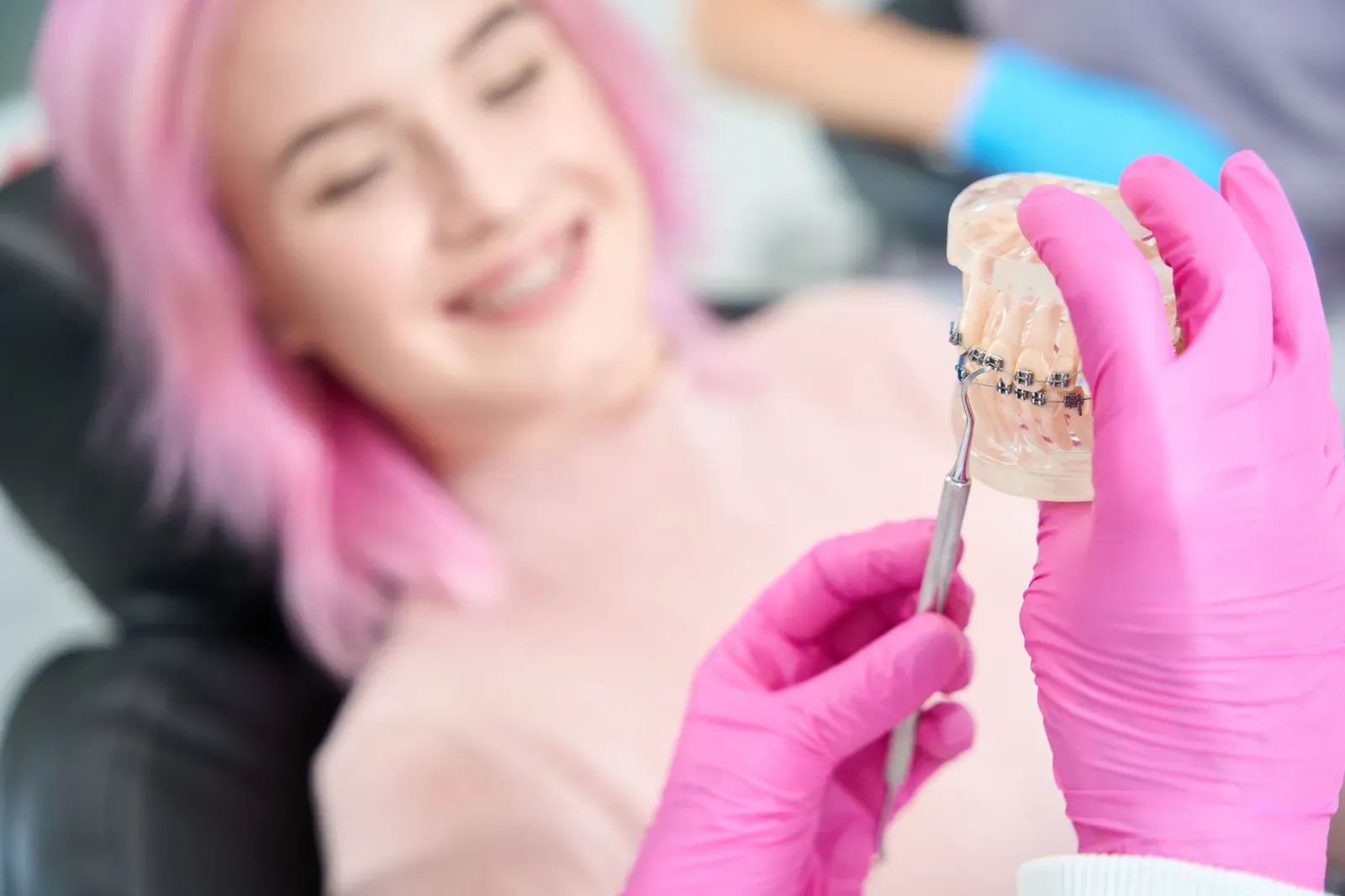
When most people picture orthodontic treatment, traditional braces are probably what comes to mind first. Despite decades of newer alternatives entering the market, metal braces remain one of the most reliable, affordable, and effective ways to correct crooked teeth, close gaps, and fix bite problems that go far beyond appearance. At Flossophy Dental Haltom, we still recommend them often, not because they're old-fashioned, but because they genuinely work for a wide range of cases that other treatments simply cannot handle as predictably.
If you or your child have been told braces might be in your future, it's natural to have questions. How do they actually move teeth? How long does treatment take? Will they hurt, and how do you take care of your teeth while wearing them? This article walks through what traditional braces actually do, who tends to benefit most, and what the day-to-day experience looks like from the first appointment to the final reveal.
Whether you're exploring options for a teenager, considering treatment for yourself as an adult, or just want to understand your choices before committing to a plan, this guide should give you a clearer picture of what's involved and how to decide if traditional braces are the right fit.
How Traditional Braces Actually Move Your Teeth
Traditional braces consist of small brackets bonded to each tooth, connected by a thin archwire that's held in place with tiny elastic ties or clips. The real work happens through gentle, continuous pressure. As the archwire tries to return to its original shape, it pulls and pushes against the brackets, nudging teeth gradually into better alignment. This isn't a quick process, and that's by design: moving teeth too fast can damage the roots and surrounding bone, so your orthodontic team calibrates the force carefully at each visit.
Every few weeks, you'll come in for an adjustment appointment where the wire is tightened or swapped for a slightly stiffer one. This incremental tightening is what keeps the treatment moving forward. Over the following months, the bone around each tooth remodels itself, allowing the tooth to settle into its new position while staying firmly anchored. It's a biological process as much as a mechanical one, and it's the reason braces remain so effective even for complex bite corrections.
Modern brackets are smaller and less conspicuous than they were a generation ago, and many patients choose clear or tooth-colored brackets to make them less noticeable. The underlying mechanics, however, haven't changed much because they work. Consistent, controlled force applied over time is still the most dependable way to correct tooth position and bite alignment.
Who Benefits Most From Traditional Braces
Braces are often associated with teenagers, and it's true that early adolescence remains an ideal window for treatment since jaw growth is still active and teeth respond well to movement. But age is not the deciding factor nearly as much as the complexity of the case. Severe crowding, significant gaps, rotated teeth, and bite problems like deep overbites, underbites, or crossbites tend to respond more predictably to fixed braces than to removable alternatives.
We also see a steady number of adult patients who either never had orthodontic treatment or experienced relapse after braces or a retainer phase years ago. There's no upper age limit for straightening teeth as long as your gums and supporting bone are healthy. During a consultation with our dental team, we evaluate your bite, review x-rays, and talk through your goals so you understand exactly what braces can realistically achieve for your specific situation.
- Severe crowding or spacing: Fixed brackets can apply precise, continuous pressure on multiple teeth at once, which is especially useful when teeth are badly overlapped or widely spaced.
- Complex bite issues: Deep bites, underbites, and crossbites often need the kind of vertical and rotational control that traditional braces provide more reliably than aligners.
- Growing jaws in children and teens: Braces can be paired with growth-guiding appliances to correct developing bite problems while the jaw is still forming.
- Patients who want a "set it and forget it" option: Because braces are fixed to the teeth, there's no removable tray to lose, forget, or need the discipline to wear consistently.
What to Expect: The Treatment Timeline
Treatment typically begins with a thorough evaluation, including digital x-rays, photographs, and impressions or a digital scan of your bite. This information helps map out exactly how your teeth need to move and roughly how long that process will take. Most patients wear braces anywhere from 18 to 30 months, though mild cases can finish sooner and more complex bite corrections may run longer. Age, how closely you follow instructions, and the severity of the original misalignment all factor into the final timeline.
The first appointment to place the brackets usually takes 60 to 90 minutes and isn't painful, though your teeth will likely feel sore and sensitive for a few days afterward as they begin adjusting to the new pressure. This is completely normal and typically manageable with over-the-counter pain relief and soft foods for the first week. After that initial adjustment period, most patients report that daily life feels normal again fairly quickly.
From there, you'll come in roughly every four to eight weeks for wire adjustments and progress checks. These visits are shorter than the initial placement, usually 20 to 30 minutes, and give your orthodontic team a chance to track how your bite is improving and make small corrections along the way. Skipping these appointments or letting a broken bracket go unrepaired can stretch out your total treatment time, so staying consistent really does pay off in the long run.
Caring for Your Braces and Your Teeth
Good oral hygiene becomes even more important once you have braces, since food and plaque can collect around brackets and wires more easily than on smooth tooth surfaces. Brushing after every meal, flossing daily with the help of a floss threader or orthodontic flosser, and rinsing with fluoride mouthwash all help prevent the white spot staining and cavities that can develop around neglected brackets. We recommend keeping up with regular professional dental cleanings throughout treatment so our hygienists can reach areas a toothbrush might miss.
Diet matters too. Sticky candies, hard nuts, popcorn, and ice can bend wires or pop brackets loose, which not only hurts but can delay your treatment timeline while you wait for a repair appointment. Most patients adjust within a week or two and barely notice the dietary changes after the initial adjustment period.
If you play contact sports or grind your teeth at night, let us know during your fitting so we can recommend an appropriate mouthguard. And if a wire does poke or a bracket comes loose between visits, don't ignore it. Our office can usually see you quickly to make a repair, and we always treat these as urgent dental concerns rather than something to wait out until your next scheduled visit.
Traditional Braces Versus Clear Aligners
It's worth being honest about how traditional braces compare to clear aligner systems like Invisalign, since many patients ask about both before deciding. Aligners offer a nearly invisible, removable option that works well for mild to moderate spacing and crowding issues in patients who are disciplined about wearing them 20 to 22 hours a day. For straightforward cosmetic corrections, they can be a great fit.
Traditional braces have an edge when the case involves significant rotation, vertical bite discrepancies, or tooth movement that requires more mechanical control than a removable tray can provide. Because brackets are bonded directly to the teeth, there's no compliance factor to worry about; the treatment keeps progressing around the clock without relying on the patient remembering to put a tray back in after meals.
Cost is another consideration, and braces are often the more budget-friendly option for complex cases, especially when dental insurance or in-house financing plans are factored in. During your evaluation, our team will walk you through both paths honestly so you can choose based on your bite, your lifestyle, and your budget rather than assumptions about which option is "better" in general.
Life After Braces: Retainers and Long-Term Results
Removing braces is an exciting milestone, but it isn't quite the finish line. Teeth have a natural tendency to drift back toward their original position, a process called relapse, especially within the first year after brackets come off. That's why every patient leaves with a custom retainer, either a removable clear tray or a thin fixed wire bonded behind the front teeth, depending on your case and preference.
In the first several months, most patients wear their retainer nearly full time, gradually tapering down to nighttime wear only. Skipping this step is the single most common reason people see their teeth shift after investing years into straightening them, so we take retainer compliance seriously and build it into your treatment plan from day one.
The payoff for sticking with the full process, braces and retention included, is a straighter, healthier bite that's easier to clean, less prone to uneven wear, and often more comfortable day to day. Many patients also notice improvements in speech clarity and jaw comfort once a misaligned bite has been corrected, benefits that go well beyond the cosmetic improvement most people expect going in.
Key Takeaways
- Traditional braces use continuous, controlled pressure from brackets and wires to move teeth and correct complex bite issues reliably.
- They're especially effective for severe crowding, spacing, and bite problems that removable aligners can struggle to fully correct.
- Most treatment plans run 18 to 30 months, with adjustment visits every four to eight weeks along the way.
- Diligent brushing, flossing, and regular cleanings protect your teeth from staining and cavities during treatment.
- Wearing your retainer as directed after braces come off is essential for keeping your new smile in place long-term.
Frequently Asked Questions
Do traditional braces hurt?
You'll likely feel pressure and soreness for a few days after placement and after each adjustment appointment, but it's generally mild and manageable with over-the-counter pain relievers. Most patients describe it as discomfort rather than sharp pain, and it typically fades within a week as your teeth and gums adjust.
How often will I need to come in for appointments?
After your initial placement, you'll typically return every four to eight weeks for wire adjustments and progress checks. These visits are shorter than your first appointment and are an important part of keeping your treatment on schedule.
Can adults get traditional braces?
Yes. There's no age cutoff for orthodontic treatment as long as your gums and the bone supporting your teeth are healthy. Many adults choose braces to correct crowding, gaps, or bite problems that were never treated earlier in life, or that relapsed after previous orthodontic work.
What happens if a bracket breaks or a wire pokes my cheek?
Give our office a call as soon as you notice an issue. A small piece of orthodontic wax can temporarily cover a poking wire, but a loose bracket or broken wire should be repaired promptly to keep your treatment on track and prevent irritation.
Will I need a retainer forever?
Most orthodontists, including our team, recommend long-term nighttime retainer wear indefinitely, since teeth can shift at any age even years after treatment. It's a small, simple habit that protects the results you worked hard to achieve.
Getting Started With Traditional Braces
Traditional braces have stuck around for good reason: they handle a wide range of orthodontic problems with a level of precision and consistency that's hard to match. Whether you're dealing with significant crowding, a bite that's affecting your jaw comfort, or a smile you've wanted to fix for years, braces offer a dependable path to real, lasting improvement.
The best way to find out if traditional braces are right for you or your child is a straightforward evaluation with our team, where we can look at your specific bite and talk through realistic timelines and options. Explore our full range of orthodontic services to see how we can help you move forward with a plan built around your smile.