Losing one or more teeth changes more than your smile. It affects how you chew, how you speak, and often how confident you feel in everyday conversations. For many of our patients in Haltom City, the path back to a comfortable, functional bite starts with a simple question: are dentures or partials the right fit for me?
Modern dentures and partials look nothing like the bulky, obviously artificial appliances many people remember from decades past. Materials, fit techniques, and design have all improved dramatically, giving patients options that look natural, feel stable, and hold up to daily use. Whether you're missing a single tooth, several teeth, or need to replace an entire arch, there's a tooth-replacement solution built around your specific situation.
This article walks through how dentures and partials work, who typically benefits from each type, what the process looks like, and how to care for your new smile once it's in place. Our goal is to give you a clear, practical understanding so you can have an informed conversation with your dentist about what makes sense for your mouth.
Understanding the Different Types of Dentures and Partials
Not every patient who has lost teeth needs the same solution. The right appliance depends on how many teeth are missing, where they're located, and the condition of your remaining teeth and gums. Broadly, tooth-replacement options in this category fall into a few main groups, each designed to solve a different problem.
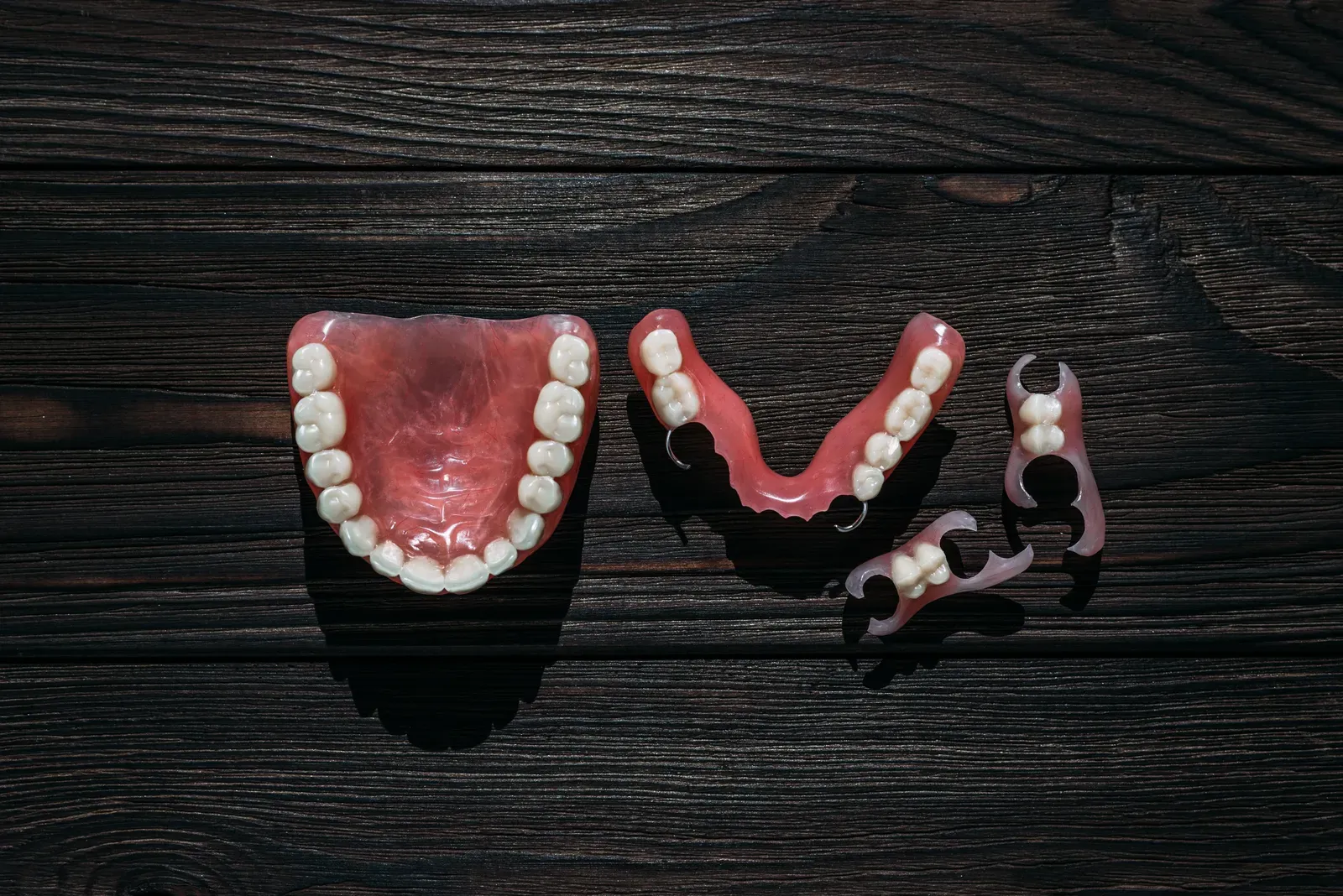
Complete dentures replace an entire arch of teeth, whether that's the upper, lower, or both. They rest on the gum ridge and are held in place by suction, natural muscle control, and sometimes denture adhesive. Partial dentures, on the other hand, fill in gaps when you still have some healthy natural teeth remaining. A partial clips onto your existing teeth using a metal or flexible framework, filling the empty spaces while keeping your remaining teeth stable and properly positioned.
There are also immediate dentures, which are placed the same day as tooth extraction so you're never without teeth during healing, and implant-supported dentures, which anchor to dental implants for significantly more stability and chewing power. For patients who are also dealing with a damaged tooth that needs to come out before a denture can be fitted, we often coordinate that extraction and the denture plan together so the whole process feels organized rather than piecemeal.
- Complete dentures: Replace a full arch of missing teeth and rest directly on the gums for support.
- Removable partial dentures: Fill gaps between remaining natural teeth using a clasp-based framework.
- Immediate dentures: Placed right after extraction so you leave with teeth the same day.
- Implant-supported dentures: Snap onto dental implants for a noticeably more secure, confident bite.
Who Actually Needs Dentures or Partials?
Tooth loss happens for a range of reasons, and age is not the deciding factor many people assume it to be. Advanced gum disease, untreated tooth decay, injury, and even certain medications or health conditions can all lead to losing teeth earlier than expected. If you've already had multiple extractions or you're facing the loss of several teeth in a short period, dentures or partials are worth discussing before gaps start affecting your bite and facial structure.
Patients who have lost teeth due to progressive gum disease are especially common candidates. In these cases, we often need to stabilize the gums first, sometimes with laser gum treatment, before moving forward with a denture or partial fitting. Addressing the underlying gum health first helps the final appliance fit better and last longer.
It's also worth noting that missing teeth don't stay a cosmetic issue for long. When a gap is left untreated, neighboring teeth can shift, your bite can become uneven, and the jawbone beneath the gap begins to shrink over time. That's why we encourage patients to think of dentures and partials as functional restorations first, with the cosmetic improvement as a welcome bonus rather than the only reason to act.
What to Expect During the Fitting Process
Getting fitted for dentures or partials is a multi-step process, and understanding the timeline ahead of time helps set realistic expectations. It typically begins with a thorough exam, including X-rays, to evaluate your jawbone, gum health, and any remaining teeth. If extractions are needed, we'll plan the healing timeline around those first, since gum tissue and bone need time to settle before a final impression is taken.
Once your mouth is ready, we take detailed impressions and bite measurements. These are used to design an appliance that matches your natural jaw movement, bite alignment, and facial proportions as closely as possible. You'll typically try on a wax or trial version first, which gives both you and your dentist a chance to check the fit, look, and feel before the final version is fabricated.
For patients considering implant-supported dentures, the timeline is longer because it involves placing dental implants and allowing them to properly integrate with the jawbone before the denture is attached. While this route takes more time upfront, many patients find the added stability and chewing confidence well worth the extra months of healing. Throughout the entire process, we schedule follow-up visits to fine-tune the fit, since even small adjustments can make a significant difference in comfort.
The Adjustment Period: What's Normal and What Isn't
It's completely normal to feel a bit of awkwardness during the first couple of weeks with new dentures or partials. Your tongue, cheeks, and jaw muscles all need time to learn how to work with the new appliance. Many patients notice slightly altered speech at first, particularly with certain consonant sounds, along with mild soreness as the gum tissue adapts to the pressure of the appliance.
Eating also takes practice. We recommend starting with soft foods cut into small pieces, chewing slowly, and using both sides of your mouth evenly to avoid putting uneven pressure on one spot. Over a few weeks, most patients find their confidence with eating and speaking returns close to normal, and the appliance starts to feel like a natural part of daily life rather than something foreign.
That said, ongoing pain, visible sores that don't heal, or a denture that feels loose or shifts during normal use isn't something to just tolerate. These are signs the fit needs adjusting, and waiting too long can lead to irritated gum tissue or even bone changes underneath the appliance. If something doesn't feel right after the initial adjustment window, it's worth a follow-up visit rather than assuming you'll simply get used to it.
Daily Care and Maintenance That Actually Extends Their Life
Dentures and partials require daily attention, just like natural teeth, and the habits you build in the first few months set the tone for how long your appliance lasts. Food particles, plaque, and bacteria can build up on dentures the same way they do on teeth, which is why rinsing after meals and brushing daily with a denture-specific brush and cleanser matters more than people expect.
Handling matters too. Dentures can crack or warp if they're dropped on a hard surface or allowed to dry out completely, so most patients keep them soaking in water or a denture solution overnight. For partials especially, caring for your remaining natural teeth is just as important as caring for the appliance itself, since those teeth are providing the support structure the partial relies on.
- Rinse after every meal: Removes food debris before it has a chance to settle into the appliance.
- Brush daily, gently: A soft denture brush and non-abrasive cleanser prevent scratches that trap bacteria.
- Soak overnight: Keeps the material from drying out, warping, or losing its proper shape.
- Keep up routine checkups: Regular dental cleanings and exams catch fit changes before they cause irritation.
Your jawbone and gums naturally change shape over time, even after tooth loss has stabilized, which means a denture that fit perfectly on day one may feel looser a year or two later. Routine visits let us catch those shifts early and reline or adjust the appliance before it starts causing discomfort or affecting how well you chew.
Key Takeaways
- Complete dentures replace a full arch, while partials fill gaps around remaining natural teeth.
- Implant-supported dentures offer added stability for patients who want a firmer, more secure bite.
- A short adjustment period involving mild soreness and speech changes is normal, but lingering pain isn't.
- Daily cleaning and regular checkups significantly extend the comfort and lifespan of any appliance.
- Untreated gaps from missing teeth can shift your bite and affect jawbone health over time.
Frequently Asked Questions
How long do dentures and partials typically last?
With good daily care and regular checkups, most dentures last between five and ten years before they need replacement or significant relining. Your jawbone and gum tissue continue to change shape gradually, so the fit should be reassessed periodically even if the appliance still looks fine.
Can I eat normally with dentures or partials?
Yes, though it takes practice, especially in the first few weeks. Most patients gradually reintroduce firmer and chewier foods as they get used to the feel of the appliance, and implant-supported options generally allow for a wider variety of foods sooner.
Will my partial denture damage my remaining natural teeth?
A well-fitted partial is designed to protect your remaining teeth by distributing bite pressure evenly and preventing them from shifting into the empty gaps. Poor fit or skipped adjustments, on the other hand, can put uneven stress on those teeth, which is why professional fitting and follow-up visits matter.
Are implant-supported dentures better than traditional ones?
They're not universally "better," but they do offer more stability and chewing strength for patients who qualify for implants and are comfortable with the longer treatment timeline. Traditional removable dentures remain a reliable, less invasive option for many patients, particularly those who prefer a shorter process or aren't candidates for implant surgery.
What if my dentures feel loose or uncomfortable?
Looseness or discomfort usually means the appliance needs an adjustment or reline rather than a full replacement. It's best to schedule a visit as soon as you notice persistent discomfort, since continuing to wear an ill-fitting denture can lead to sores and uneven bone changes underneath it.
Finding the Right Fit for Your Smile
Replacing missing teeth with dentures or partials is about far more than appearance. The right appliance restores your ability to eat comfortably, speak clearly, and maintain the natural structure of your face and jaw over the years ahead. Whether you need a full arch replacement, a partial to fill in a few gaps, or an implant-supported option built for maximum stability, the best results come from a fitting process tailored specifically to your mouth.
If you've been living with gaps, a shifting bite, or a denture that no longer fits the way it used to, it's worth having that conversation with a dental team that takes the time to get the details right. Our restorative dentistry team at Flossophy Dental Haltom is here to help you find a solution that fits comfortably, functions well, and gives you back the confidence to smile, eat, and talk without second-guessing yourself.