Losing one tooth or several can change far more than your smile. It affects how you chew, how you speak, and even how your jaw and facial muscles support themselves over time. For many patients in Haltom City, dentures and partials remain one of the most reliable, affordable, and proven ways to restore a full set of teeth and get back to eating, talking, and smiling without hesitation.
Modern dentures look nothing like the bulky, obviously artificial sets many people remember from past generations. Today's materials and fabrication methods produce replacement teeth that fit more comfortably, look more natural, and hold up better to daily wear. Whether you're missing all of your teeth or just a few, there's likely a denture or partial solution designed specifically for your situation.
This guide walks through what dentures and partials actually are, who tends to benefit most from each type, what the process of getting fitted looks like, and how to keep them in good condition once you have them. If you've been putting off a decision about missing teeth, understanding your options is the first step toward a more comfortable, confident daily life.
Understanding the Different Types of Dentures and Partials
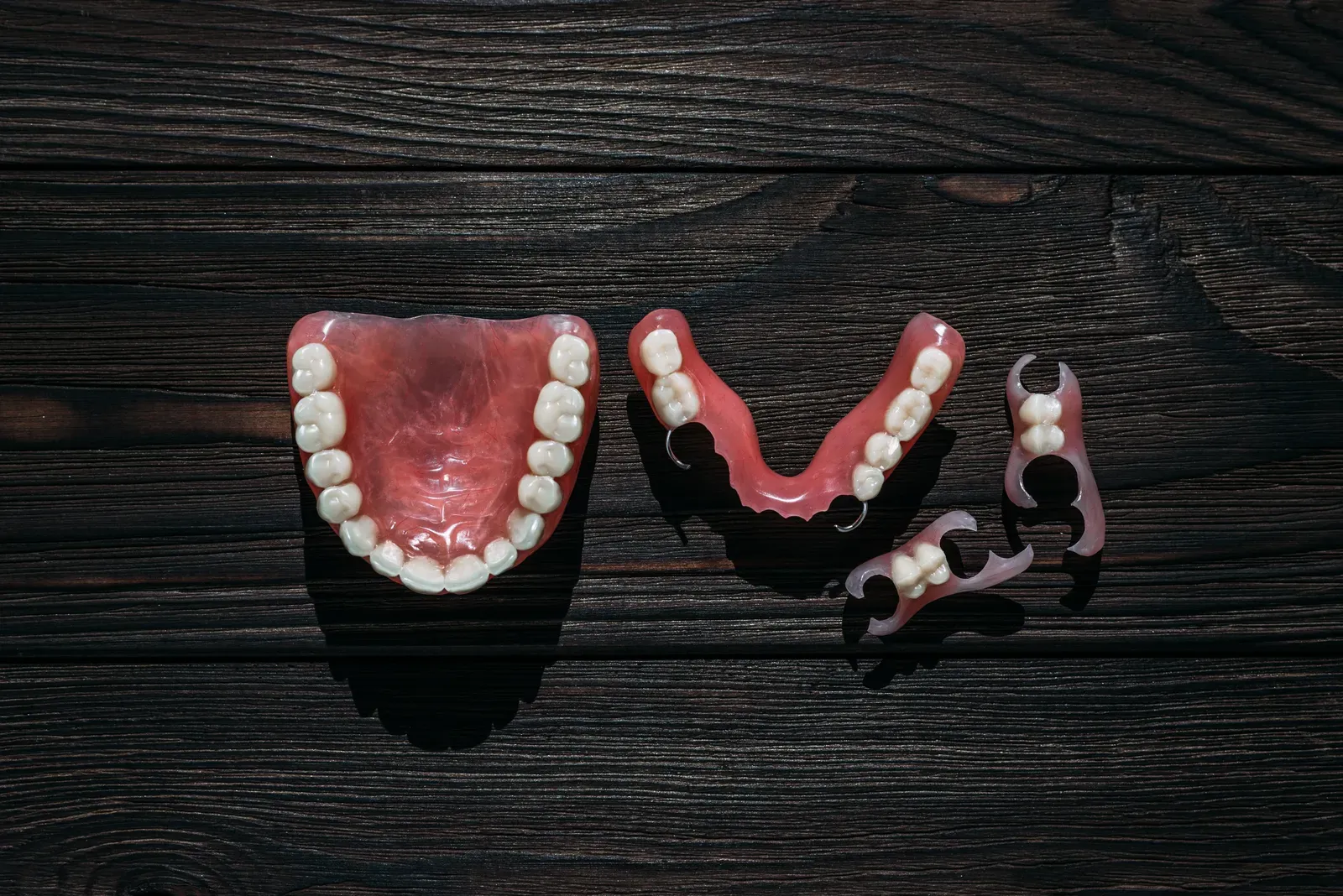
Not everyone missing teeth needs the same solution, which is why dentures come in several distinct forms. A complete denture replaces an entire arch of teeth, upper or lower, and rests directly on the gums. A partial denture, by contrast, fills in gaps where only some natural teeth remain, using a metal or acrylic framework that clips onto neighboring teeth for support and stability.
Within these broad categories, there are further distinctions worth knowing. Conventional dentures are placed after the gums have fully healed from extractions, which can take several weeks to a few months. Immediate dentures, on the other hand, are placed the same day teeth are removed, allowing you to avoid going without teeth during the healing period, though they typically need relining later as the gums settle into their final shape.
There's also a growing option worth mentioning: implant-supported dentures, which anchor to a small number of dental implants placed in the jawbone for significantly improved stability. For patients who want the chewing strength closer to natural teeth, combining dentures with dental implants is worth discussing with your dentist.
Who Actually Needs Dentures or Partials?
Tooth loss happens for different reasons at different stages of life, and dentures or partials can address nearly all of them. Decades of untreated decay, advanced gum disease, traumatic injury, or simply genetics can all lead to missing teeth. For some patients, it's a single accident that results in tooth loss; for others, it's a gradual decline over years that eventually leaves too few healthy teeth to maintain a full bite.
Age plays a role too, though it's a common misconception that dentures are only for older adults. While many patients who need full dentures are indeed older, partial dentures are frequently used by younger and middle-aged adults who've lost one or more teeth to injury or extraction but still retain a healthy set of remaining teeth. A partial lets them avoid the cost and permanence of a bridge while still restoring function and appearance.
- Patients with extensive decay or periodontal disease: When too many teeth are compromised to save through fillings or root canal therapy, full or partial dentures become a practical path forward.
- Patients recovering from multiple extractions: After tooth extractions, dentures restore the ability to chew and speak while the mouth heals.
- Patients wanting a non-surgical alternative: Some people prefer to avoid surgery altogether, making removable dentures a lower-intervention choice compared to implants or bridges.
- Patients working within a budget: Dentures and partials are typically more affordable upfront than implant-based solutions, which matters for many families.
What to Expect During the Fitting Process
Getting fitted for dentures or partials is a multi-step process, and understanding it ahead of time makes the whole experience feel far less uncertain. It typically starts with a thorough oral examination, including X-rays, to assess the condition of any remaining teeth, gum tissue, and jawbone. This helps your dentist determine whether extractions are needed first and which type of denture will serve you best.
Next comes a series of impressions and bite registrations. These capture the precise shape of your mouth and how your upper and lower jaws meet, which is critical for a denture that fits comfortably and functions well. From these impressions, a custom model is created, and you'll typically try on a "wax trial" version so adjustments to tooth shape, color, and alignment can be made before the final denture is fabricated.
Once the final denture or partial is ready, it's fitted in the mouth and checked for comfort, bite alignment, and appearance. Minor adjustments are common at this stage, and most dental teams schedule a short follow-up visit within a week or two to fine-tune anything that feels off. If you're also managing other dental concerns at the same time, your provider may coordinate this with broader restorative dentistry treatment planning to address everything in the right sequence.
Adjusting to Your New Dentures
It's completely normal for new dentures to feel strange for the first few weeks. Your tongue, cheeks, and lips need time to adapt to the presence of a new appliance, and minor soreness, increased saliva flow, or slight difficulty pronouncing certain words are common early experiences. These issues almost always improve as the muscles in your mouth learn the new fit.
Practical Tips for the First Few Weeks
Starting with softer foods cut into small pieces makes chewing easier while you adjust, and gradually reintroducing firmer foods helps build confidence. Practicing speech by reading aloud for a few minutes a day can speed up adaptation as well. If soreness persists beyond a couple of weeks or a spot feels consistently irritated, that's a sign an adjustment appointment is needed rather than something to simply push through.
Patience matters here. Most patients report feeling significantly more natural with their dentures within four to six weeks, and many forget they're even wearing them during normal daily activities after that point. If anything feels persistently wrong, don't wait, reach out so small issues don't turn into bigger ones.
Daily Care That Keeps Dentures Lasting Longer
Dentures require a different care routine than natural teeth, but it's no less important. Treating them with the same consistency you'd apply to brushing and flossing keeps them functioning well and helps protect the gum tissue and any remaining natural teeth underneath or around them.
Daily cleaning removes plaque, food particles, and bacteria that can otherwise build up and cause bad breath or gum irritation. Dentures should be brushed gently with a soft-bristled brush and a non-abrasive cleanser, never regular toothpaste, which can scratch the surface and create spots where bacteria accumulate. Soaking overnight in a denture-cleaning solution keeps them from drying out and losing their shape, since most denture materials need to stay moist to maintain their fit.
Regular checkups remain important even after you're fully adjusted to wearing dentures. Over months and years, the shape of your gums and jawbone naturally changes, which can affect how well a denture fits. Routine visits allow your dental team to catch fit issues early, check your oral tissue for any signs of irritation or infection, and keep up with general dental cleanings for any remaining natural teeth. If you ever experience a crack, chip, or sudden looseness, treat it as something to address quickly through emergency dentistry care rather than waiting it out.
Comparing Dentures to Other Tooth Replacement Options
Dentures and partials aren't the only way to replace missing teeth, and understanding how they compare to alternatives helps you make a more informed choice. Dental bridges, for example, replace one or more missing teeth by anchoring a false tooth to the adjacent natural teeth, which are reshaped to support crowns. This works well for smaller gaps but requires healthy neighboring teeth and isn't removable.
Dental implants are placed surgically into the jawbone and function closest to a natural tooth root, offering strong, permanent support for individual crowns or full arches. They tend to cost more and require a longer treatment timeline, including healing time for the bone to integrate with the implant, but many patients find the long-term stability worth the investment. For patients missing all or most of their teeth, exploring both standard dentures and implant-supported options side by side, with input from your dental team, makes it easier to weigh cost, timeline, and lifestyle factors against each other.
Ultimately, the right choice depends on your oral health, budget, and personal preferences. Some patients choose dentures now with the plan to transition to implants later; others find a well-fitted partial or complete denture meets their needs for years without any further intervention. A conversation with your dentist, taking your full dental and medical history into account, is the best way to land on the right path for you.
Key Takeaways
- Complete dentures replace a full arch of teeth, while partials fill gaps around remaining natural teeth using a supportive framework.
- Immediate dentures are placed the day teeth are removed, while conventional dentures wait until the gums fully heal.
- Expect an adjustment period of several weeks as your mouth adapts to speaking and chewing with your new denture.
- Daily cleaning and regular checkups keep dentures functioning well and protect your remaining oral health.
- Implant-supported dentures offer added stability for patients who want stronger chewing function long-term.
Frequently Asked Questions
How long do dentures typically last?
Most dentures last between five and ten years with proper care, though the exact timeline depends on how well they're maintained and how your gums and jawbone change over that period. Regular checkups help identify when a reline, adjustment, or full replacement is needed.
Will dentures affect how I speak or eat?
There's typically a short adjustment period where speech and chewing feel different, but most patients adapt within a few weeks. Practicing with softer foods and reading aloud can help speed up the process significantly.
Can I sleep with my dentures in?
Most dentists recommend removing dentures at night to give your gum tissue a chance to rest and to reduce the risk of bacterial buildup. Soaking them overnight in a cleaning solution also helps maintain their shape and longevity.
Are partial dentures noticeable?
Modern partial dentures are designed to blend with your natural teeth, using tooth-colored acrylic and carefully matched materials. Many patients find that others don't notice unless specifically told, especially with newer flexible or precision-fit frameworks.
What happens if my dentures no longer fit well?
Over time, natural changes in your gums and jawbone can cause dentures to loosen or shift. Rather than living with discomfort, schedule a visit so your dentist can evaluate whether a reline, adjustment, or new denture is the right next step.
Finding the Right Fit for Your Smile
Missing teeth don't have to mean compromising on comfort, confidence, or how you enjoy daily meals and conversations. Dentures and partials have come a long way, offering natural-looking, dependable solutions tailored to how your mouth actually functions, not a generic one-size-fits-all mold. Whether you need a full set, a partial to fill in a few gaps, or a combination approach with implants, there's a path that fits your needs and your budget.
If you've been living with missing teeth or an ill-fitting denture, the most important step is simply starting the conversation with a dental team who can walk you through your options clearly and honestly. A proper evaluation, an accurate fit, and a care plan built around your specific mouth make all the difference between a denture that feels like a burden and one that feels like a natural part of your daily life.