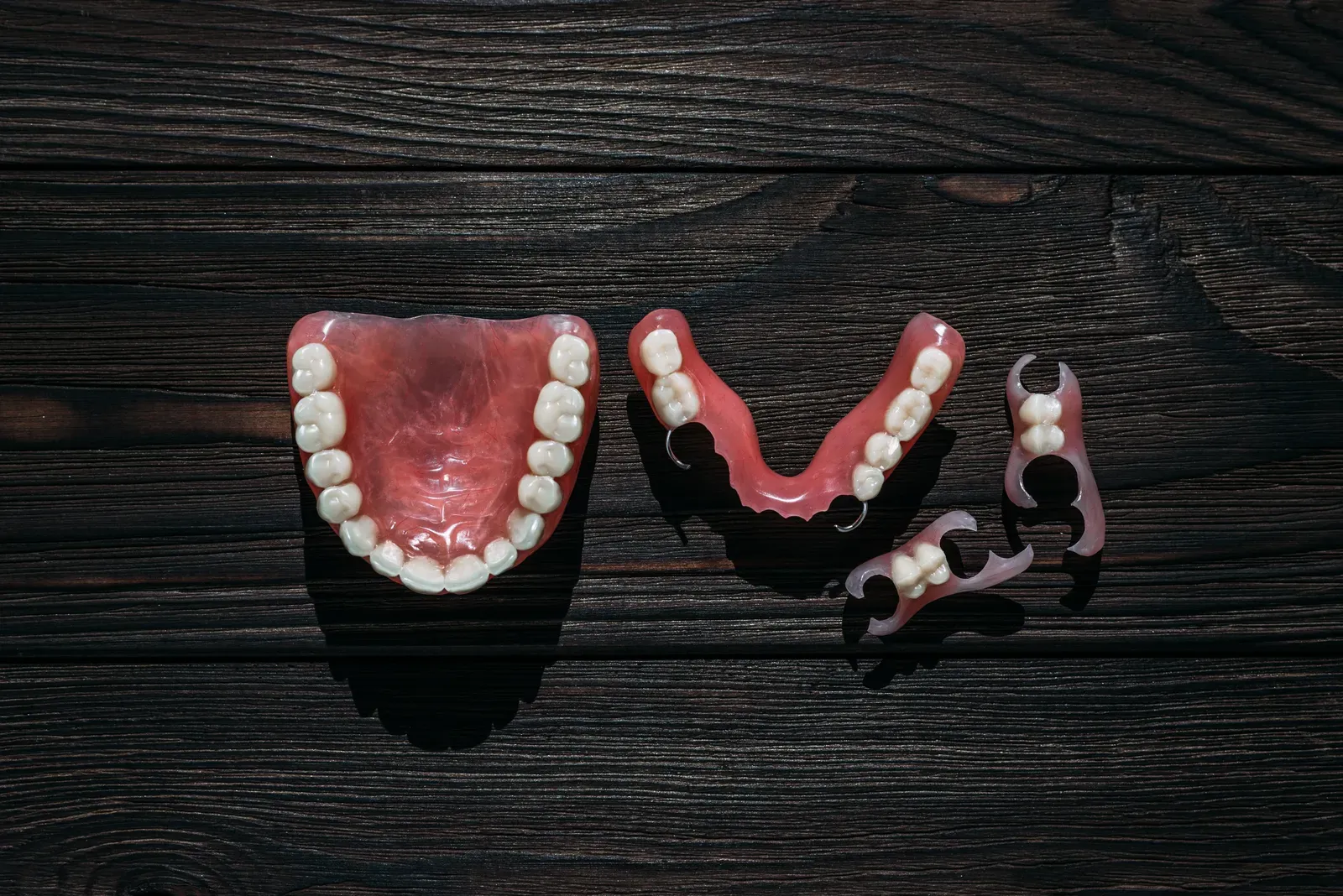
Losing one tooth or several can change the way you eat, speak, and feel about smiling in public. It's a far more common experience than most people realize, and the good news is that modern dentures and partials have come a long way from the bulky, ill-fitting devices many people picture when they hear the word "denture." Today's options are more comfortable, more natural-looking, and more durable than ever.
If you're weighing your options for replacing missing teeth, it helps to understand exactly how dentures and partials work, who they're right for, and what daily life looks like once you have them. This guide walks through the practical details so you can have an informed conversation with your dentist and feel confident about the path forward.
Whether you're missing a single tooth, several teeth in a row, or all of your natural teeth on one or both arches, there's a denture or partial solution built for your situation. Let's look at what that actually involves.
Understanding the Different Types of Dentures and Partials
Not all tooth loss looks the same, and neither does the solution for it. A complete denture replaces every tooth on an arch, resting directly on the gum tissue and held in place by suction, adhesive, or in some cases dental implants. A partial denture, by contrast, fills in gaps where some natural teeth remain, using a metal or flexible framework that clips onto your existing teeth for stability.
Within these two broad categories, there's more nuance than most patients expect. Immediate dentures are placed the same day as tooth extraction, so you're never without teeth during healing, though they typically need relining once your gums fully settle. Conventional dentures are made after the gums have healed completely, usually a couple of months after extractions, resulting in a more precise and stable fit from the start. Implant-supported dentures anchor to a small number of dental implants placed in the jawbone, dramatically improving stability and chewing strength compared to a denture that rests on the gums alone.
Partials come in a few varieties, too. Cast metal partials are the most durable and precise, flexible resin partials are more forgiving on sensitive gum tissue, and acrylic partials are often used as a temporary or budget-conscious option. Your dentist will recommend a type based on how many teeth remain, the condition of your gums and jawbone, and your personal priorities around comfort, appearance, and longevity.
How Do You Know If Dentures or Partials Are Right for You?
Tooth loss happens for a lot of reasons: advanced gum disease, untreated decay, injury, or simply the wear and tear of time. Whatever the cause, the risks of leaving gaps unaddressed are real. Remaining teeth can shift out of position, your bite can become unbalanced, and the jawbone beneath a missing tooth can begin to shrink from lack of stimulation. Over time, this can change the shape of your face and make future tooth replacement more complicated.
Dentures and partials are a strong fit for patients who have lost multiple teeth and want a non-surgical, cost-effective way to restore both function and appearance. They're also a practical option for patients who aren't candidates for more invasive procedures due to bone loss, certain medical conditions, or personal preference. If you've already had a tooth extraction or are facing one soon, talking through replacement options in advance helps you avoid the gap period that can lead to bone and bite changes.
- Multiple missing teeth: If you've lost several teeth in one area or across an arch, a partial or full denture restores a complete, functional bite.
- Difficulty speaking or eating: Gaps between teeth often affect pronunciation and make chewing certain foods uncomfortable or impossible.
- Self-consciousness about your smile: Visible gaps can affect confidence in everyday social and professional situations.
- Budget or health considerations: Dentures and partials are generally more affordable and less invasive than implant-based full-arch solutions.
What Happens During the Fitting Process?
Getting fitted for dentures or partials is a collaborative process that usually spans several visits rather than a single appointment. It begins with a thorough exam, including X-rays, to evaluate the health of your remaining teeth, gums, and jawbone. This is also the point where your dentist discusses whether any extractions are needed first, or whether your mouth is already ready for impressions.
From there, detailed impressions and bite measurements are taken to capture the exact shape of your mouth and how your upper and lower jaws meet. These measurements are sent to a dental lab, where your denture or partial is custom-fabricated. A "try-in" appointment often follows, where you test a wax or trial version so your dentist can check fit, bite alignment, and the appearance of the teeth before the final version is processed.
Once the final denture or partial is ready, your dentist fits it in your mouth, checks that it seats properly, and makes any small adjustments to pressure points or bite alignment. For patients interested in implant-supported dentures, this process includes an additional surgical phase where implants are placed and allowed to heal before the denture is attached. You can learn more about that option through our dental implants page if you're curious whether it's a fit for your situation.
Adjusting to Life With New Dentures
It's completely normal for new dentures to feel strange at first. Your tongue and cheek muscles need time to adapt to the new shape in your mouth, and most patients notice some increased saliva production, minor speech changes, and a learning curve with eating during the first few weeks. This adjustment period typically settles within a month as your muscles and soft tissue adapt.
Practical Tips for the First Few Weeks
Starting with softer foods cut into small pieces makes chewing easier while you build confidence. Reading out loud for a few minutes a day can help retrain your speech patterns faster than you'd expect. And if you notice a sore spot that doesn't improve within a few days, it's worth scheduling a quick adjustment visit rather than trying to push through discomfort, since even a fraction of a millimeter of excess pressure can cause real irritation over time.
Follow-up adjustments are a normal, expected part of the process, not a sign that something went wrong. Gum tissue changes shape slightly as it settles into its new relationship with the denture, and small refinements along the way help the fit stay comfortable and secure.
Caring for Your Dentures So They Last
Dentures and partials require daily care, much like natural teeth, though the routine looks a little different. Plaque still builds up on denture surfaces and can irritate gum tissue or cause bad breath if it's left unaddressed, so a consistent cleaning habit matters just as much as it did with your natural teeth.
Beyond cleaning, regular dental checkups remain essential even after you've transitioned to dentures. Your dentist checks for gum irritation, monitors how your jawbone and gum ridge are changing over time, and evaluates whether your denture needs relining or replacing. Most dentures need to be relined periodically and typically replaced every five to ten years as the shape of your mouth naturally shifts.
- Brush daily, but gently: Use a soft-bristled brush and a non-abrasive cleanser made for dentures to avoid scratching the surface.
- Soak overnight: Most full and partial dentures need to stay moist when not worn to prevent warping.
- Handle with care: Clean over a folded towel or basin of water in case you drop them, since they can crack on hard surfaces.
- Keep up with checkups: Routine visits catch fit issues, gum irritation, or bone changes before they become bigger problems.
Are There Alternatives Worth Considering?
Dentures and partials aren't the only route to replacing missing teeth, and part of a good consultation is understanding how they compare to other options. A dental bridge can replace one or a few missing teeth by anchoring to the adjacent natural teeth, which works well when those neighboring teeth are healthy and you'd prefer a fixed, non-removable solution. Dental implants, meanwhile, replace individual teeth or support a full denture with a level of stability that closely mimics natural tooth roots.
The right choice depends on factors like the number of missing teeth, the health of your jawbone, your budget, and how much time you're willing to invest in treatment. Many patients start with a removable denture or partial and later transition to implant-supported options once they're ready for that step. Our team walks through all of these trade-offs honestly during a consultation, because the best option is the one that fits your mouth, your lifestyle, and your goals, not a one-size-fits-all recommendation.
If cost is a concern, it's worth asking about financing options and checking your coverage through our insurance information page, since many plans offer partial coverage for prosthodontic treatment.
Key Takeaways
- Dentures replace all teeth on an arch, while partials fill gaps around remaining natural teeth.
- Implant-supported dentures offer greater stability than traditional removable dentures.
- The fitting process takes several visits, including impressions, a try-in, and final adjustments.
- A short adjustment period is normal, and minor fit tweaks shouldn't be ignored.
- Daily cleaning and regular dental checkups keep dentures comfortable and functional for years.
Frequently Asked Questions
How long does it take to get used to new dentures?
Most patients adjust within two to four weeks. Speech and chewing tend to feel awkward at first, but gradually improve as your tongue and cheek muscles learn to work with the new appliance. Sticking with softer foods early on and practicing speaking out loud can speed up the adjustment.
Can I sleep in my dentures?
It's generally better to remove them at night so your gum tissue and jawbone get a rest from constant pressure. Soaking them overnight in a denture solution also helps keep them clean and properly shaped.
Will dentures change how my face looks?
In a good way, usually. Well-fitted dentures restore support to your lips and cheeks that may have sunken in after tooth loss, often giving your face a fuller, more natural appearance. Your dentist designs the denture's shape and tooth positioning with your facial structure in mind.
How often do dentures need to be replaced?
Most dentures last five to ten years before they need replacement, though relines may be needed sooner as your gum ridge changes shape. Regular checkups help catch fit changes early, before they cause discomfort or sore spots.
Are partials noticeable when I talk or smile?
Modern partials are designed to blend in with your natural teeth and gum tone, and clasps are positioned to be as discreet as possible. Flexible resin partials, in particular, are known for a more natural look with less visible hardware than older metal-clasp designs.
Finding the Right Fit for Your Smile
Missing teeth don't have to mean compromising on comfort, confidence, or quality of life. Whether a full denture, a partial, or an implant-supported option makes the most sense for you, the key is working with a dentist who takes the time to understand your mouth, your habits, and your goals before recommending a path forward.
If you've been putting off replacing missing teeth or you're unhappy with a denture that no longer fits the way it used to, it's worth having a conversation about your options. A well-made, well-fitted denture or partial can restore the ability to eat, speak, and smile without a second thought, and that's worth taking seriously.