Losing one tooth or several can change how you eat, speak, and feel about your smile almost overnight. Whether it happened gradually through decay and gum disease or suddenly after an injury, the gap it leaves behind affects more than appearance. Chewing becomes harder, nearby teeth can shift out of place, and your confidence often takes a hit right along with your bite.
Dentures and partials remain two of the most reliable, time-tested solutions for replacing missing teeth. They have come a long way from the bulky, uncomfortable appliances many people picture when they hear the word "dentures." Today's versions are custom-crafted to fit your mouth precisely, built from materials that look and feel far more natural, and designed with your long-term comfort in mind.
This article walks through what dentures and partials actually are, who tends to benefit most from each type, what the process of getting fitted looks like, and how to care for them once they're part of your daily routine. If you have been putting off a decision about missing teeth, understanding your options is the first step toward getting your smile and your confidence back.
In This Article
Understanding the Different Types of Dentures and Partials
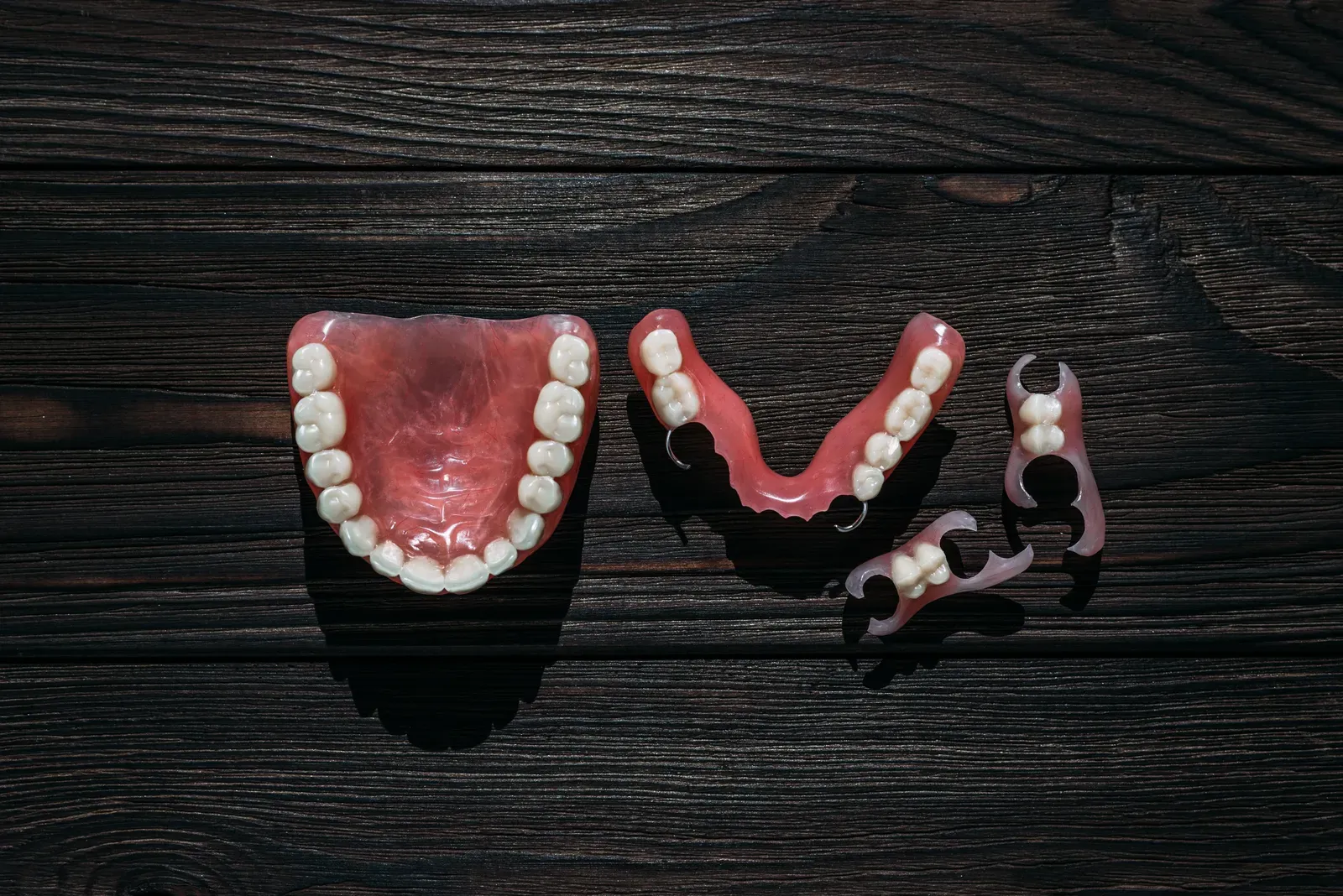
Not every patient missing teeth needs the same solution, which is why dentures come in several distinct forms. Complete dentures replace an entire arch of teeth, upper, lower, or both, and are typically recommended when all natural teeth in that arch are missing or need to be removed. They rest directly on the gum ridge and rely on suction, muscle control, and sometimes a mild adhesive to stay in place throughout the day.
Partial dentures, on the other hand, fill in gaps when you still have some healthy natural teeth remaining. A partial uses a metal or acrylic framework that clips onto your existing teeth, holding replacement teeth securely in the empty spaces without disturbing the teeth you still have. This option is often paired with other treatments, and depending on the condition of your remaining teeth, your dentist may also discuss dental bridges as an alternative way to close smaller gaps.
There is also a growing category known as implant-supported or implant-retained dentures, which anchor the appliance to surgically placed implants rather than relying solely on the gum tissue. These offer significantly more stability and chewing power, though they require a healthy jawbone and a separate surgical phase. For patients exploring this route, a conversation about dental implants alongside traditional denture options helps clarify which path fits your budget, health history, and long-term goals.
Who Actually Needs Dentures or Partials?
People arrive at this decision from many different starting points. Some have lost teeth gradually over years due to untreated gum disease or repeated decay, while others face sudden tooth loss from an accident or a tooth that could not be saved despite treatment. Age plays a role too, though it is far from the only factor; we see patients in their thirties and forties needing partials just as often as patients in their seventies needing full dentures.
A thorough evaluation usually reveals whether a tooth is salvageable through root canal therapy or whether it has reached the point where tooth extraction and replacement make more sense long-term. This is an important distinction because preserving a natural tooth, when it can be done safely and predictably, is almost always preferable to removing it. Dentures and partials become the right recommendation once a tooth or several teeth are beyond saving, or when a patient has already lost teeth and needs a reliable way to restore function.
Common Reasons Patients Choose This Option
- Multiple missing teeth: When several teeth in a row or scattered across the arch are gone, a partial or full denture restores a complete, functional bite far more efficiently than individual replacements.
- Difficulty speaking clearly: Gaps between teeth change airflow and tongue placement, which can affect pronunciation. Replacing those teeth often restores clearer speech.
- Chewing limitations: Missing back teeth especially make it hard to break down food properly, which can affect digestion and nutrition over time.
- Facial support concerns: Losing teeth can cause facial muscles to sag, giving the face a sunken look. Dentures help restore natural facial contours.
What to Expect During the Fitting Process
Getting fitted for dentures or partials is a careful, multi-step process, and understanding it ahead of time tends to ease a lot of unnecessary worry. The first visit usually involves a comprehensive exam, including impressions or digital scans of your mouth, x-rays, and a discussion of your bite and jaw relationship. If any remaining teeth need attention first, whether that means a filling, a dental cleaning, or an extraction, that work typically happens before the denture fabrication begins.
Once impressions are taken, a dental lab crafts a model and then a "try-in" version of the denture, often in wax, so your dentist can check the fit, bite alignment, and appearance before the final version is made. This step matters because it gives you a chance to see how the teeth look and feel, and to request adjustments to shape, color, or positioning before anything is finalized. Most patients go through one or two try-in appointments before the permanent denture is ready.
The final fitting appointment involves placing the finished denture or partial and checking that it sits securely, feels comfortable, and does not cause excessive pressure on any single area of the gums. Your dentist will also walk you through insertion and removal, and schedule a short-term follow-up to make small adjustments as your mouth adapts. It's worth noting that if a dental emergency arises during this process, such as a broken temporary appliance, our emergency dentistry team is available to help right away.
The Adjustment Period: What's Normal and What Isn't
It's completely normal for a new denture or partial to feel strange for the first several days or even weeks. Your mouth has to relearn how to position your tongue and cheeks, and the muscles that hold the appliance in place need time to build coordination. Mild soreness, increased saliva production, and a bit of difficulty pronouncing certain words are common early on, and most of these symptoms fade within two to four weeks as your mouth adjusts.
That said, there is a difference between normal adjustment and a fit problem that needs correction. Persistent sore spots, a denture that repeatedly slips while talking or eating, or pain that worsens rather than improves are all signs that the appliance needs a professional adjustment rather than more time to "break in." Trying to tough out genuine fit issues on your own often leads to irritated gum tissue and can even change how the denture seats over time, so it's always better to come in for a quick check.
Eating with a new denture also takes practice. We generally recommend starting with soft foods cut into small pieces, chewing slowly, and using both sides of your mouth evenly to keep the appliance balanced. As your confidence grows, you can gradually reintroduce firmer foods. Most patients find that within a month or two, eating feels close to second nature again.
Daily Care and Maintenance Tips That Make a Difference
Dentures and partials require a cleaning routine that's different from brushing natural teeth, but it's just as important for your oral health. Food particles and plaque can build up on the appliance just as they would on real teeth, and that buildup can irritate your gums or cause bad breath if it's ignored. A consistent daily routine keeps both the denture and the tissue underneath it healthy.
- Rinse after eating: Removing food debris right after meals prevents it from hardening into plaque that's harder to clean off later.
- Brush daily with the right tools: Use a soft-bristled denture brush and a non-abrasive cleanser, never regular toothpaste, which can scratch the surface and create spots where bacteria collect.
- Soak overnight: Most dentures need to stay moist to maintain their shape, so soaking them in water or a denture-soaking solution overnight is important.
- Handle with care: Dentures can crack or warp if dropped, so clean them over a folded towel or a basin of water as a cushion.
- Keep up with checkups: Regular dental visits let your dentist check the fit, inspect your gum tissue, and catch small problems before they become bigger ones.
If you have a partial denture, caring for your remaining natural teeth matters just as much as caring for the appliance itself. Clasps and connectors rest directly against those teeth, so keeping them clean and cavity-free protects both your natural smile and the longevity of the partial.
Signs It's Time to Replace or Reline Your Denture
Dentures are durable, but they are not meant to last forever. Over time, the bone and gum tissue underneath them naturally change shape, a process that continues for years after teeth are lost. As that happens, a denture that once fit snugly can start to feel loose, rock slightly when you chew, or cause more frequent sore spots, even if nothing appears visibly wrong with the appliance itself.
A reline, which involves refitting the base of the denture to match your current gum contours, is often enough to solve looseness in the early stages and can usually be done without replacing the whole appliance. However, after several years of wear, cracking, staining, or worn-down chewing surfaces may signal that a full replacement is the better long-term investment. On average, most dentures need replacement or a significant refit every five to eight years, though this varies based on how well they're cared for and how much your mouth has changed.
If you've been dealing with jaw discomfort alongside denture issues, it's also worth mentioning this during your visit, since ill-fitting dentures can sometimes contribute to strain patterns associated with TMJ disorders. Addressing the fit of your denture often relieves that added strain as a secondary benefit.
Key Takeaways
- Dentures and partials are custom-built solutions for replacing missing teeth, ranging from full arch replacement to partial frameworks for smaller gaps.
- The fitting process involves impressions, a try-in stage, and final adjustments to ensure comfort and a secure bite.
- A brief adjustment period is normal, but persistent pain or slipping should always be checked by your dentist.
- Daily cleaning, careful handling, and regular checkups keep dentures functioning well and protect remaining natural teeth.
- Gum and bone changes over time mean relines or replacements are a normal, expected part of long-term denture care.
Frequently Asked Questions
How long does it take to get used to wearing dentures?
Most patients notice significant improvement within two to four weeks as their mouth muscles adapt to the appliance. Speaking and eating typically become more comfortable with practice, though full adjustment can take a few months for some people.
Can I sleep with my dentures in?
We generally recommend removing dentures at night to give your gum tissue a chance to rest and recover. Removing them also reduces the risk of bacterial buildup, which can occur more easily when dentures stay in place around the clock.
Will dentures affect how my food tastes?
A properly fitted denture, especially one that doesn't cover too much of the roof of your mouth, shouldn't meaningfully change how food tastes. Any initial changes in sensation usually fade quickly as you adjust to the new appliance.
Are implant-supported dentures better than traditional ones?
Implant-supported dentures generally offer more stability and stronger chewing function since they're anchored to the jawbone. However, traditional dentures are more affordable upfront and don't require surgery, so the better choice really depends on your budget, health, and personal priorities.
How do I know if I need a full denture or just a partial?
This depends entirely on how many healthy teeth you have remaining and their condition. A full exam will determine whether your remaining teeth can support a partial framework or whether a complete denture is the more practical, long-term solution.
Finding the Right Fit for Your Smile
Tooth loss is a common experience, but it doesn't have to permanently limit how you eat, speak, or smile. Dentures and partials have evolved into precise, comfortable, and genuinely natural-looking solutions, and the right choice really comes down to your unique dental history, the number of teeth involved, and your personal goals for long-term comfort and function.
If you've been living with missing teeth or an uncomfortable existing denture, a thorough evaluation is the best place to start. Our team can walk through your options honestly, explain what to expect at each stage, and help you find a solution built around how you actually eat, speak, and live day to day.