Missing a tooth changes more than your smile. It can shift the way you chew, the way your other teeth settle into place, and even the shape of your jawbone over time. For many of our patients at Flossophy Dental Haltom, the question isn't whether to replace a missing tooth, but which option will hold up the longest and feel the most like a natural tooth again. Dental implants have become the answer most dentists reach for first, and for good reason.
Unlike a bridge or a removable denture, an implant replaces the entire tooth structure, root included. That root is what anchors the replacement crown securely in your jaw, which is why implants tend to look, feel, and function more like your original teeth than any other option available today. But implants are also a bigger decision than a filling or a whitening session. They involve surgery, healing time, and an investment that patients reasonably want to understand before they commit.
This article walks through what dental implants actually are, how the procedure unfolds from consultation to final crown, what influences the cost, and what recovery really feels like. Our goal is to give you a clear, honest picture so you can have an informed conversation with our team about whether implants are the right path for your smile.
What Exactly Is a Dental Implant?
A dental implant is a small titanium or titanium-alloy post that replaces the root of a missing tooth. It's placed directly into the jawbone, where it gradually fuses with the surrounding bone through a process called osseointegration. Once that fusion is complete, the implant becomes a stable, permanent foundation for whatever is attached on top, whether that's a single crown, a bridge, or a full denture.
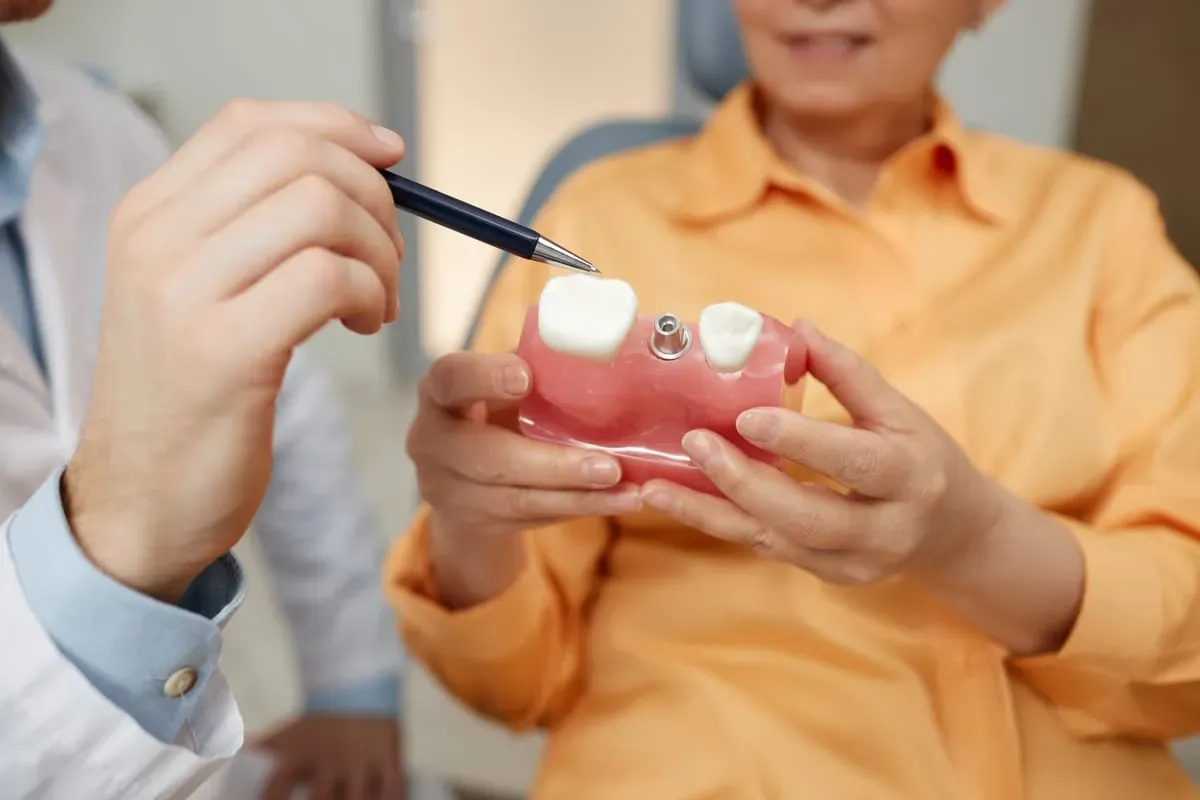
The implant system has three parts working together. The post itself sits below the gumline and does the job a natural root once did. An abutment connects the post to the visible restoration, and the crown, bridge, or denture sits on top and does the visible work of chewing and smiling. Each piece is custom fitted, which is part of why implants can look so convincingly natural in the mouth.
Titanium is used because the human body tends to accept it well without rejection, and because it's strong enough to withstand normal biting forces for decades. In recent years, zirconia implants have also become available for patients who prefer a metal-free option, though titanium remains the most widely used and best-studied material in implant dentistry.
Who Is a Good Candidate for Implants?
Most healthy adults who have lost one or more teeth are reasonable candidates for implants, but a few factors matter more than others. The biggest one is bone volume. Because the implant post needs enough jawbone to anchor into, patients who have been missing a tooth for a long time, or who've experienced bone loss from gum disease, sometimes need a bone graft before the implant can be placed. This isn't unusual, and it doesn't rule anyone out; it simply adds a preparatory step.
Gum health is the second major factor. Active gum disease needs to be treated and stabilized before implant surgery, since healthy gum tissue is part of what keeps an implant secure long term. We'll also look at overall health history during your consultation, since certain conditions like uncontrolled diabetes or a habit of heavy smoking can slow healing and affect how well the implant integrates with bone.
- Adults missing one or more teeth: whether from decay, injury, or an extraction, a single implant or several can replace what's gone.
- Patients with sufficient jawbone density: enough bone volume supports the implant post without needing extra grafting.
- Those in generally good health: well-managed chronic conditions typically don't prevent implant placement.
- Non-smokers or those willing to pause smoking: smoking slows healing and can reduce implant success rates.
How the Implant Procedure Actually Unfolds
Getting a dental implant isn't a single visit; it's a process that typically unfolds over several months, with each stage giving your body time to heal before the next one begins. Understanding this timeline in advance helps patients feel less surprised and more prepared when we talk through their individual treatment plan.
Consultation and Planning
The process starts with a thorough exam, including digital x-rays or a 3D scan of your jaw. This lets us measure bone density, map out nerves and sinuses, and plan the exact position and angle for the implant. If a bone graft or tooth extraction is needed first, we'll address that before moving forward.
Placing the Implant Post
During a short surgical appointment, the titanium post is placed into the jawbone under local anesthesia. Most patients describe the procedure itself as far less uncomfortable than they expected, largely because the area is fully numbed and the process is precise rather than invasive in the way people often picture. A healing period of three to six months follows, during which the bone fuses tightly around the post.
Attaching the Abutment and Crown
Once integration is confirmed, a small connector called an abutment is attached to the post, and impressions are taken to craft your custom crown. The final restoration is color-matched to your surrounding teeth and shaped to fit naturally into your bite. This last stage usually takes just a couple of appointments to complete.
What Recovery Looks Like Week by Week
Recovery after implant placement happens in layers. The first few days involve the most noticeable swelling and tenderness, which typically responds well to over-the-counter pain relievers and a soft-food diet. Most patients return to work or normal routines within two to three days, though we recommend avoiding strenuous exercise for about a week to reduce swelling and protect the surgical site.
The deeper healing, the osseointegration process where bone actually fuses to the implant, takes much longer than the surface healing you'll notice. This typically runs three to six months depending on which jaw the implant is in and your individual bone quality. Lower jaw implants tend to integrate a bit faster than upper jaw implants because the bone there is generally denser.
During this window, we'll check in periodically to confirm everything is progressing as expected. Once we've confirmed solid integration through follow-up imaging, we move forward with the abutment and crown. Patients are often surprised at how uneventful this middle stretch is; after the first week, there's typically little to no discomfort, and the implant site simply needs time to do its quiet work beneath the gum.
What Determines the Cost of an Implant?
Implant pricing varies more than almost any other dental treatment, because so much depends on each patient's starting point. A single implant with a straightforward placement costs differently than a case requiring bone grafting, sinus lift surgery, or replacement of multiple teeth. Rather than quoting a flat number, we build a plan based on what your mouth actually needs, then walk through the full cost before any work begins.
Several factors shape the final price: the number of implants being placed, whether preparatory procedures like extractions or grafting are needed, the type of restoration attached on top (a single crown versus a full-arch bridge, for example), and the materials used for both the post and the crown. Dental insurance coverage for implants varies widely from plan to plan, with some covering a portion of the restoration but not the surgical placement, so it's worth reviewing your specific benefits with our front desk team.
It helps to think about cost over the long run rather than just the upfront number. Implants are built to last for decades with proper care, while bridges typically need replacement every ten to fifteen years and dentures require ongoing adjustments and eventual replacement. When you factor in the cost of replacements and repairs over a lifetime, implants often end up being a more economical choice even though the initial investment is higher.
Caring for Your Implant for the Long Run
One of the most appealing things about implants is how little special treatment they require once they've healed. They aren't prone to cavities the way natural teeth are, since the crown material doesn't decay. That said, the gum tissue and bone around the implant still need the same attention you'd give your natural teeth, because gum disease can affect an implant just as it affects a natural tooth root.
Daily brushing and flossing around the implant site, along with routine professional cleanings, are what keep the surrounding tissue healthy over time. We also recommend regular checkups so we can monitor the implant and catch any early signs of a condition called peri-implantitis, an inflammation of the tissue around the implant that, if left untreated, can eventually affect its stability.
Patients who grind their teeth at night may benefit from a custom nightguard, since excessive grinding forces can put stress on the implant and the crown over time. With consistent home care and regular visits, a well-placed implant can realistically serve you for the rest of your life, which is part of why so many patients describe it as the best decision they made for their smile.
Key Takeaways
- Dental implants replace both the root and the visible tooth, offering stability and a natural look that bridges and dentures can't fully match.
- The full process spans several months, allowing time for the implant to fuse securely with your jawbone before the final crown is placed.
- Candidacy depends mainly on bone density and gum health, both of which we evaluate carefully during your consultation.
- Cost varies by case, but implants often prove more economical over a lifetime compared to repeated bridge or denture replacements.
- With daily brushing, flossing, and routine checkups, implants can last for decades.
Frequently Asked Questions
Is getting a dental implant painful?
The placement procedure itself is done under local anesthesia, so you shouldn't feel pain during surgery. Afterward, most patients experience mild soreness and swelling for a few days, which is usually manageable with over-the-counter pain medication. Many describe the recovery as easier than they anticipated.
How long does the entire implant process take?
From initial placement to the final crown, the full process typically takes three to eight months, depending on healing speed and whether grafting is needed first. The timeline can be longer for complex cases but shorter for patients with excellent bone density and no preparatory work required.
Can I get an implant if I've been missing a tooth for years?
In many cases, yes. Long-term tooth loss often leads to some bone shrinkage in that area, but a bone graft can rebuild adequate volume before implant placement. We'll assess your bone with imaging during your consultation to determine the right approach.
Are dental implants noticeable in the mouth?
No. The crown attached to the implant is custom shaded and shaped to match your surrounding teeth, and the metal post sits entirely beneath the gumline. Most people can't tell the difference between an implant-supported tooth and a natural one.
What happens if my body doesn't accept the implant?
Implant failure is uncommon, with success rates generally above 95 percent, but it can occasionally happen due to infection, insufficient bone integration, or smoking-related healing issues. If this occurs, the implant can usually be removed and replaced once the area has healed, often with a successful outcome the second time.
Making the Right Choice for Your Smile
Replacing a missing tooth is rarely just a cosmetic decision. It affects how you chew, how your bite comes together, and how the rest of your teeth hold their position over the years. Dental implants address all of that at once by restoring both the root and the visible tooth, which is why so many dentists consider them the gold standard for tooth replacement.
Every mouth is different, and the right path forward depends on your bone health, your overall health history, and what you're hoping to achieve. The best way to know whether implants make sense for you is a conversation with our team, where we can look at your specific situation and lay out a plan that fits your timeline and your budget.