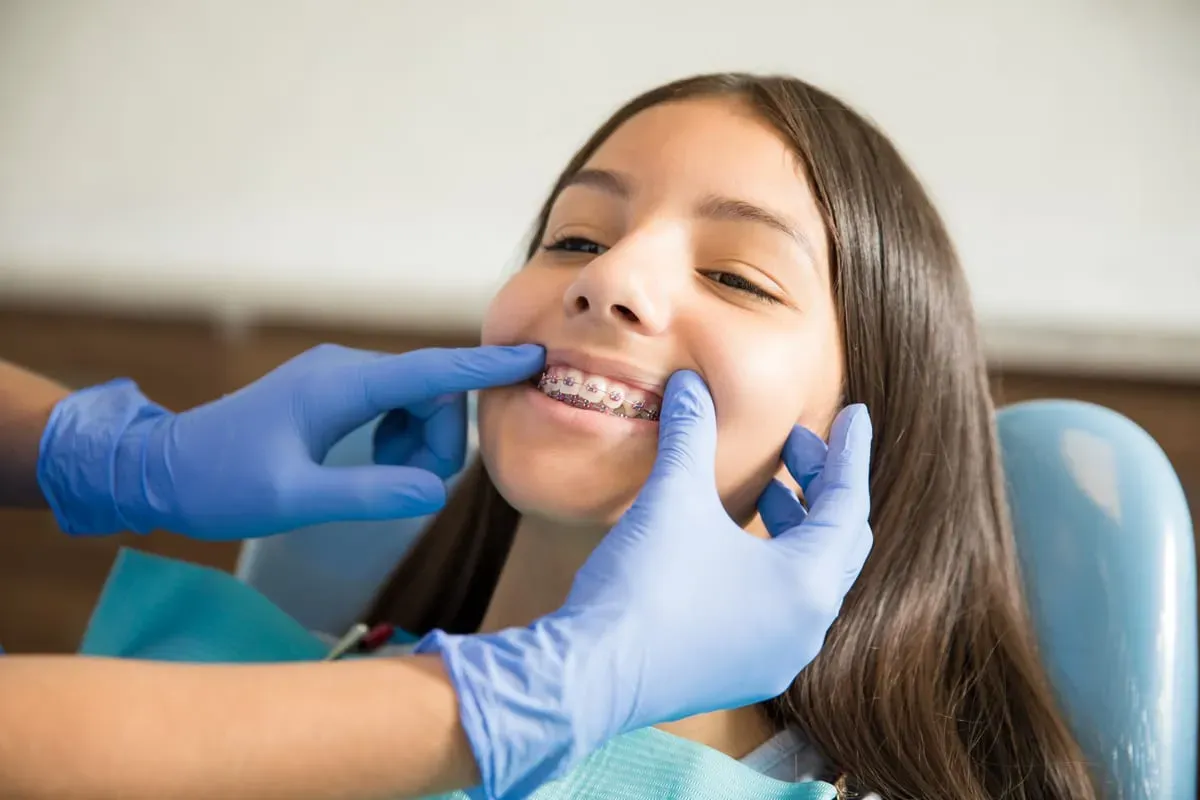
If you've spent years quietly wishing your teeth were straighter, you're far from alone. A growing number of adults are walking into dental offices asking the same question: is it too late for braces? The short answer is almost always no. Orthodontic treatment today looks very different from the metal-mouth memories many of us carry from middle school, and the reasons to pursue it go well beyond appearance.
Crooked, crowded, or misaligned teeth aren't just a cosmetic concern. They can make brushing and flossing harder, put uneven pressure on your jaw joints, and contribute to problems like chipped teeth or premature wear. Over time, a bite that doesn't line up correctly can lead to headaches, jaw pain, and gum recession in specific spots where teeth are taking more than their share of the load.
At Flossophy Dental Haltom, orthodontic care is one of the services we're asked about most, often by patients who assumed braces were only for teenagers. This article walks through how modern orthodontics works, who it's actually for, and what you can expect if you decide to move forward with treatment.
Who Actually Needs Orthodontic Treatment?
Most people picture orthodontics as something reserved for kids with obviously crooked teeth, but the range of issues it addresses is much broader. Crowding, gaps between teeth, overbites, underbites, crossbites, and open bites all fall under the orthodontic umbrella. Some of these are visible the moment you smile; others are subtle enough that you might not notice them until a dentist points out uneven wear patterns or a jaw that clicks when you chew.
Adults often seek treatment for reasons that have nothing to do with vanity. Teeth naturally shift over time, even if you had braces as a teenager and didn't keep up with your retainer. Years of grinding, missing teeth that were never replaced, or gum disease that loosened tooth attachments can all cause movement that creates new spacing or crowding issues later in life.
A thorough orthodontic evaluation looks at more than just how your teeth look side by side. We assess how your upper and lower jaws meet, how evenly your bite force is distributed, and whether your jaw joints are under strain. That fuller picture is what helps us recommend a plan that solves the actual problem rather than just the part you can see in the mirror.
Braces vs. Clear Aligners: Which Fits Your Life?
One of the biggest shifts in orthodontics over the past decade has been the range of options now available to patients. Traditional metal braces are still an excellent, reliable choice, especially for more complex bite corrections, but they're no longer the only path to a straighter smile. Clear aligner systems have become a popular alternative for patients who want a more discreet option that fits around a busy work or social schedule.
Neither option is universally "better." The right choice depends on the complexity of your case, your daily habits, and your personal preferences. Here's a quick breakdown of how the main options compare:
- Traditional metal braces: Brackets and wires that stay on your teeth around the clock, giving us precise, continuous control over tooth movement. Often the most efficient choice for significant crowding or complex bite issues.
- Clear aligners: A series of custom, removable trays that gradually shift teeth. Popular with adults because they're far less noticeable and can be taken out for meals and important meetings.
- Ceramic braces: Function like metal braces but use tooth-colored brackets, offering a middle ground between effectiveness and visibility.
- Retainer-only correction: For minor relapse or very mild shifting, a well-designed retainer or short-term aligner series may be all that's needed.
What Actually Happens During Treatment?
Orthodontic treatment starts well before any brackets go on or any aligner trays are handed over. The first step is always a detailed exam, including digital images or x-rays that let us see root positions, bone levels, and how your jaw is structured. This information shapes a treatment plan built around your specific bite, not a one-size-fits-all approach.
Once treatment begins, teeth move gradually in response to steady, gentle pressure. With braces, that pressure comes from periodic wire adjustments during in-office visits, typically every four to eight weeks. With clear aligners, each tray in the series is designed to nudge your teeth slightly further than the last one, and you'll move to a new tray roughly every one to two weeks while checking in with us less frequently than you would with braces.
It's normal to feel some pressure or mild soreness for a few days after an adjustment or when switching to a new aligner tray. This isn't a sign anything is wrong; it's simply your teeth and the surrounding bone responding to the forces reshaping their position. Most patients find the discomfort manageable and far less disruptive than they expected.
Beyond a Straight Smile: The Health Benefits
It's easy to think of orthodontics purely in cosmetic terms, but straighter teeth genuinely function better. When teeth are properly aligned, your bite distributes chewing forces evenly, which reduces the risk of cracked teeth, worn enamel, and strain on the jaw joints. A bite that's out of balance tends to concentrate stress on just a few teeth, and over years that uneven wear can lead to expensive restorative work.
Alignment also has a direct relationship with how easy it is to keep your mouth clean. Crowded or overlapping teeth create tight spaces where a toothbrush bristle or floss thread can't fully reach, and those hidden spots are exactly where plaque builds up and cavities start. Patients who complete orthodontic treatment often tell us that brushing and flossing feel easier and more effective simply because there's nowhere for debris to hide.
For some patients, bite correction also relieves symptoms they didn't realize were connected to their teeth at all, including recurring headaches, jaw soreness, and clicking or popping in the jaw joint. Addressing the underlying alignment issue often reduces or resolves these symptoms over time, which is one reason we treat orthodontic consultations as part of a broader conversation about your overall oral health, not just a cosmetic add-on.
How Long Does Treatment Typically Take?
Treatment length depends heavily on what you're correcting. A minor case involving a little crowding or a small gap might wrap up in six to twelve months with clear aligners. A more involved bite correction, especially one involving significant crowding or jaw misalignment, can take eighteen months to two and a half years with traditional braces. Your age, bone density, and how consistently you follow instructions (particularly with removable aligners) all play a role too.
Why Consistency Matters So Much
With removable aligners, the biggest variable in treatment timeline isn't the technology, it's wear time. Aligners need roughly 20 to 22 hours of daily wear to move teeth on schedule. Patients who frequently skip wear time or forget to switch trays on schedule often see their treatment stretch out by months beyond the original estimate. We build in regular check-ins specifically to catch these issues early and adjust the plan before small delays become bigger setbacks.
With fixed braces, timeline is somewhat more predictable since the appliance stays on your teeth continuously. Still, keeping scheduled adjustment appointments matters, since skipping or delaying visits slows the steady progression that keeps treatment on track.
Life After Braces: Retainers and Long-Term Care
Finishing active treatment, whether that means the braces come off or you complete your final aligner tray, is a genuine milestone, but it isn't quite the finish line. Teeth have a natural tendency to drift back toward their original position, a process called relapse. That's why retainers are a non-negotiable part of the process, not an optional extra.
Most patients wear a retainer full-time for a period after treatment ends, then gradually shift to nighttime-only wear for long-term maintenance. Some retainers are removable, while others are thin wires bonded behind the front teeth for continuous, low-maintenance support. We'll help you decide which fits your lifestyle and the specifics of your case.
Regular dental checkups remain just as important after orthodontics as they were before. Straight teeth still need routine cleanings, cavity checks, and monitoring to make sure your bite stays stable over the years. Think of orthodontic treatment as the foundation; ongoing care is what keeps that investment protected.
Key Takeaways
- Orthodontic treatment isn't just for teenagers; many adults benefit from correcting shifting, crowding, or bite problems at any age.
- Options now include traditional braces, ceramic braces, and clear aligners, each suited to different cases and lifestyles.
- Straighter teeth reduce uneven wear, make cleaning more effective, and can ease jaw strain and related headaches.
- Treatment length varies from several months to a couple of years, depending on case complexity and consistency with wear instructions.
- Retainers and routine checkups after treatment are essential to keep your results stable long-term.
Frequently Asked Questions
Am I too old for braces or clear aligners?
There's no upper age limit for orthodontic treatment as long as your gums and jawbone are healthy enough to support tooth movement. We regularly treat patients in their 30s, 40s, 50s, and beyond. The main requirement is a healthy foundation, which is something we assess during your initial evaluation.
Will orthodontic treatment hurt?
Most patients experience mild pressure or soreness for a few days after adjustments or switching aligner trays, but it's rarely described as painful. Over-the-counter pain relief and soft foods for the first day or two are usually enough to manage any discomfort while your teeth adjust.
Can I get orthodontic treatment if I already have crowns or missing teeth?
In many cases, yes. Crowns can be moved orthodontically just like natural teeth, and gaps from missing teeth are often part of what we're correcting. We'll review your full dental history and current restorations during your consultation to design a plan that works with your mouth as it is today.
How do I know if I need braces or clear aligners instead of just a retainer?
A quick visual exam often isn't enough to tell. We take images and evaluate your bite relationship, not just the visible crowding, to determine whether minor correction will suffice or whether a fuller course of treatment is needed. This is exactly why a proper consultation matters before committing to any specific product or plan.
What happens if I don't wear my retainer after treatment?
Teeth can begin shifting back toward their original position within weeks of inconsistent retainer wear, especially in the first year after treatment. Some relapse can often be corrected with a short refinement course, but prevention is far simpler and less costly than correcting it a second time.
Finding the Right Next Step for Your Smile
Orthodontic treatment has changed enough in the last decade that it's worth a fresh look even if you dismissed the idea years ago. Whether your priority is correcting a bite that's causing jaw discomfort, closing a gap that's bothered you since childhood, or simply making your daily brushing and flossing more effective, there's likely an approach that fits both your dental needs and your daily routine.
The best way to know what's realistic for your specific smile is a proper evaluation, not a guess based on how your teeth look in photos. Our team at Flossophy Dental Haltom can walk you through your options, explain what we see in your bite and alignment, and help you decide on a path that makes sense for your life, your budget, and your timeline.